Friday, December 12, 2008

Kiva.org

Do you wish you could give more this time of year but, being a student, you don't have very much to give! Well, have you considered lending?

As the website says, “Kiva lets you lend to a specific entrepreneur in the developing world – empowering them to life themselves out of poverty.”

It's fun! I contributed $25 to a loan for a woman in Nigeria who wanted to open a small pharmacy. They do gift cards, and I just found out that there's a UM-SPH lending team on Kiva that you can join!


Check it out at Kiva.org

Wednesday, November 19, 2008

Chinese Public Health Posters

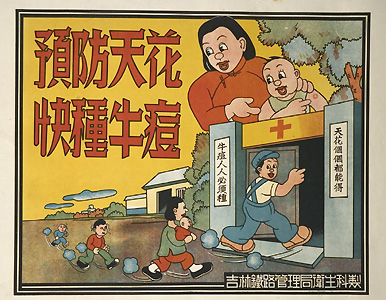
Images are an important tool in the promotion of public health around the world. The National Library of Medicine (part of NIH) has recently created an online exhibition of around 7,000 images titled "Public Health and Chinese Society from 1930s to SARS."

"The collection has a wide range of media presentations: posters, health newsletters, health newspapers, paintings, pharmaceutical advertisements, calendars, children's chess games, jigsaw puzzles on health topics, playing cards on SARS, lantern slides, negatives, photographs, and health award certificates, as well as books and journals. These materials present rich visual representations of public health concerns which were closely tied to the political, social, economic, and even military engagements of China during different time periods."
Here are a few of the images:

"Go to have smallpox vaccination, ca. 1956."


" How baby hookworms get into human bodies (1), 1957."

"Properly cover yourself with bedding during sleep, ca. 1935."

Check out the rest of it at: Chinese Public Health Posters

Monday, November 3, 2008

Pharmaceutical Manufacturing Plan for Africa

This week WDI's guest lecturer, Dr. Sebastian Fries, will talk about the pharmaceutical company Pfizer's new strategy to increase global access to medications. Access to essential medications has been an ongoing and controversial issue in areas worst hit by diseases such as malaria, HIV/AIDS, and TB.

Ministers of Health from across Africa came together to address this issue at an African Union Conference held in Johannesburg, South Africa last year. They drafted a paper that outlined the advantages of developing local pharmaceutical industries, and presented a plan of action to make that happen. You can read the paper here: http://www.pambazuka.org/actionalerts/images/uploads/Pharmaceutical_Plan-CAMH_MIN._8(III).pdf

Whether the best way of insuring access to essential medications is by developing local pharmaceutical industries, holding Western pharmaceutical companies more socially accountable, or some other model is part of the ongoing controversy of this issue.

Tuesday, October 21, 2008

JSI Publications

John Snow, Inc. (JSI) is an Public Health research and consulting firm that does both domestic and international work. According to their website

JSI builds local capacity to address critical health problems, collaborating with local partners to assist countries, governments, communities, families, and individuals to develop their skills and identify solutions that meet their public health needs. Through management assistance, research and evaluation, education, and training, JSI works to enable agencies and health professionals to provide appropriate services in an effective and compassionate manner.

JSI has published papers on a wide range of public health issues, including environmental health, HIV/AIDS, health care financing, nutrition, and women's health. Most of these publications are available on line though their website: www.jsi.com/JSIInternet/Publications/index.cfm

These publications offer new insights and serve as valuable resources for anyone interested in understanding the issues or doing further research on them.

Tuesday, October 14, 2008

The "Deadly Dozen"

Creating effective solutions to global health problems depends on a wide range of partners. One of these is the Wildlife Conservation Society (WCS). In 2006 WCS and USAID partnered to create the GAINS program (Global Avian Influenza Network for Surveillance) to track and monitor avian flu. Since then, the group has started to investigate other zoolonotic diseases that it believes pose a threat to international stability and trade.
“Emerging infectious diseases are a major threat to the health and economic stability of the world,” said Congresswoman Rosa L. DeLauro (D-CT3), a champion for the GAINS Program. “What we’ve learned from WCS and the GAINS Program is that monitoring wildlife populations for potential health threats is essential in our preparedness and prevention strategy and expanding monitoring beyond bird flu to other deadly diseases must be our immediate next step.”
Last week, the WCS presented findings of a new report called, The Deadly Dozen: Wildlife Diseases in the Age of Climate Change. The report lists 12 zoonotic diseases that are predicted to spread into new regions of the world as a result of global climate change. The following diseases made the list:
  1. Avian influenza
  2. Babesiosis
  3. Cholera
  4. Ebola
  5. Intestinal and external parasites
  6. Lyme disease
  7. Plague
  8. "Red tides"
  9. Rift Valley Fever
  10. Sleeping sickness
  11. Tuberculosis
  12. Yellow fever
You can find more information about the Deadly Dozen report here and here.

-Andy Pritchard

Monday, October 6, 2008

The Village Bicycle Project

Many of us in Public Health feel particularly fortunate to be able to combine our passion with our career goals. We are artists and musicians, writers and researchers, athletes and counselors, and we each try and find our own way to blend these talents with the health interventions we develop, hoping to make the healthy choice the easy, and fun, choice. The Village Bicycle Project (VBP) is a a small organization that ships used bikes to different countries in which the average person cannot afford a car. It is a great example of blending a passion, in this case, for bicycles, with a greater public health mission, here, providing the poor with a means to travel long distances, increase their income, and better support their families.

I invite you to check out the website (http://www.pcei.org/vbp/), and use the VBP structure to develop your own intervention that uses your strengths in an effort to combat society's weakness. In Ann Arbor, there are certainly many passionate people. There are also many bikes. I invite you to consider participating in the Village Bicycle Project, and to consider using your passion for global public health to create a VBP branch at the University of Michigan.

-William Lopez

Monday, September 29, 2008

A DIFFERENT TYPE OF DRUG COMPANY

The Institute for OneWorld Health is a non-profit pharmaceutical company that develops safe, effective, and affordable new medicines for people with infectious diseases in the developing world. OneWorld Health is a new model for GLOBAL HEALTH. They are entrepreneurial, generate unique opportunities, invent creative solutions.

There is an inspirational video that highlights the founder's passionate journey towards starting OneWorld Health. You can watch the short Uncommon Heroes movie by clicking on the link below:

http://www.oneworldhealth.org/media/audio_video.php

-Shachi Khichadia